LinkedIn Just Declared War on AI Slop. Here’s What That Means for Your Reach.
By Edwin Rogers · · 4 min read
May 25, 2026 | 5 min read
I’ve been saying it for months: the LinkedIn content game was about to break.
Last week, it did.
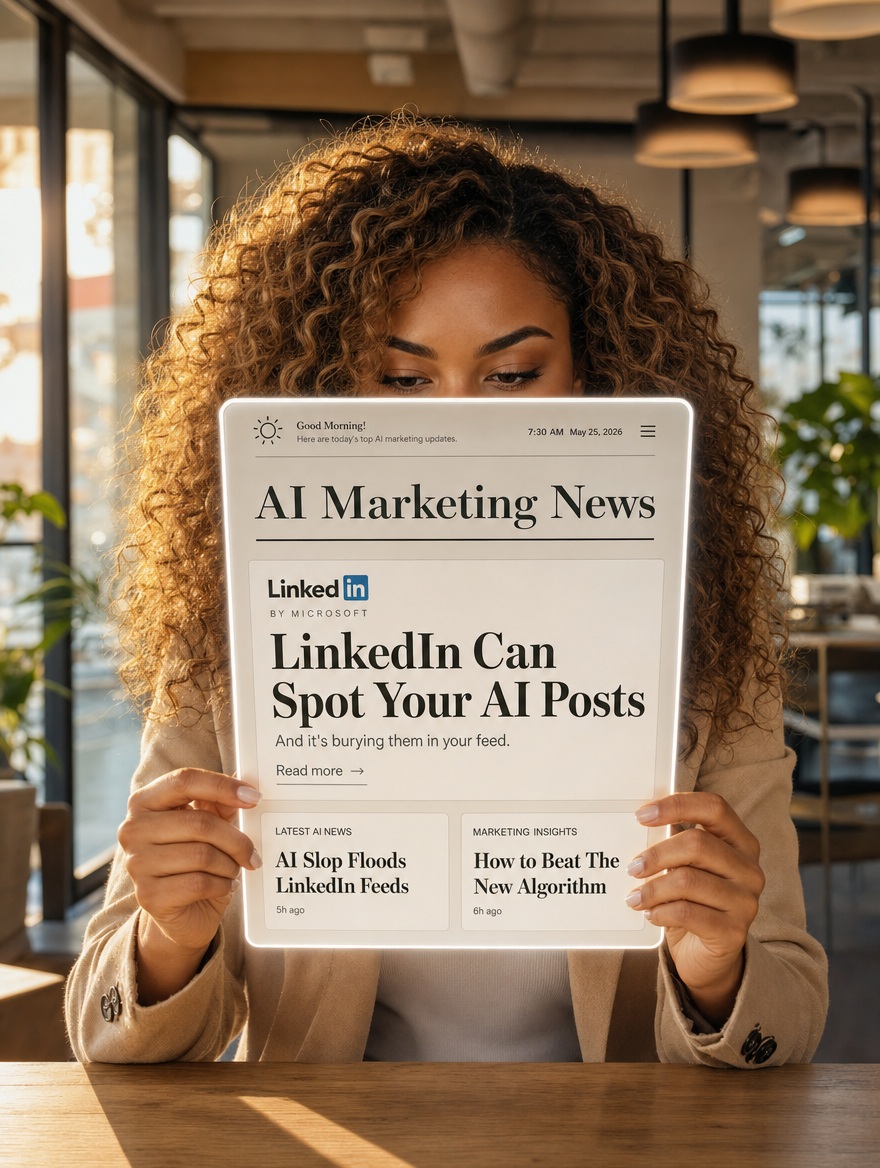
On May 19, 2026, LinkedIn VP and Executive Editor Laura Lorenzetti confirmed that the platform is now actively suppressing what it calls “AI slop” from its feed recommendations. Not deleting it. Suppressing it. Quietly. Without warning. If your content gets flagged, your post stays visible to your direct connections and disappears from everyone else’s feed entirely.
This is not a policy update. This is a structural shift in how LinkedIn decides who gets reach.
What Actually Happened
LinkedIn announced it is deploying what Lorenzetti describes as an “AI solving AI” detection system. The platform’s editorial team hand-annotated thousands of posts, labeling each one as either generic or original based on detailed content quality criteria. Multiple human reviewers assessed each post for consistency. Those labeled examples then trained machine learning classifiers that now run on every post published to the platform, at scale.
In early testing, LinkedIn claims 94% detection accuracy.
Three categories are in the crosshairs. First: generic AI-generated posts and thought leadership that recycles existing ideas without adding perspective, context, or expertise. Second: automation tools that generate AI comments at scale, the kind that summarize your post back at you in two suspiciously formal sentences. Third: attention-bait videos, content lifted from Instagram or TikTok paired with vague business platitudes, designed to hold watch time without delivering value.
“Content creation on the platform is up 14% year over year. That makes sense, right? AI can really help people unlock content creation. But it also means that a lot of people can produce a lot of very low-quality content.”, Laura Lorenzetti, VP and Executive Editor, LinkedIn
Flagged posts will not be removed. They will be suppressed from recommendations, meaning they remain visible to a poster’s direct connections but will not spread across the broader feed.
Why This Hits Different for Marketers
Most marketers using LinkedIn right now have some version of the same workflow. You collect a few ideas, feed them into ChatGPT, lightly edit the output, and post. Maybe you use a commenting tool to show up in your target audience’s feed. Maybe you batch-create content three weeks ahead and schedule it.
That workflow is now a liability.
LinkedIn is not saying stop using AI. The platform is explicit about that. What it is saying is that if your AI usage produces content that sounds generic, repetitive, or pattern-matched to a formula the system has learned to recognize, your reach will quietly collapse. You will be posting into a void while your metrics still show impressions from your direct connections, masking the real problem.
The irony here is real: LinkedIn itself offers an AI writing assistant that auto-generates post drafts and comment suggestions. The platform is building the firehose and the filter at the same time. What that tells me is that the bar is not “was this written by AI?” The bar is “does this sound like everyone else?”
The marketers who will lose reach are the ones treating LinkedIn like a content vending machine. The ones who will gain reach are the ones who use AI to sharpen an original take rather than replace the thinking entirely.
What to Do This Week
- Audit your last 10 posts through the lens of LinkedIn’s criteria. Ask whether each one adds perspective, context, or expertise that is specific to you, your industry, or your clients. If the post could have been written by anyone in your field without any unique information, it is at risk. Rewrite the weakest two with your actual point of view front and center.
- Stop using AI commenting tools immediately if you are using them. LinkedIn has already technically banned these under its terms of service. The new classifiers are actively looking for the volume patterns and language signatures these tools produce. If you get flagged for bot behavior, the consequences extend beyond individual post suppression.
- Build a 30-day voice document. Spend 20 minutes writing raw, unfiltered thoughts about something you observed in your client work this week. No polish, no structure. Use that document as the seed material for every LinkedIn post you write this month. Feed it to AI to help you structure and sharpen, but keep the raw observations yours. That specificity is what LinkedIn’s classifiers are trying to reward.
The rollout will take several months to fully impact user experience. That window is your advantage. The marketers who adapt now will see their reach increase as the generic content around them gets suppressed. The ones who don’t will wonder why their numbers quietly cratered.
LinkedIn’s feed problem is real and it has been getting worse. The platform knows it. This crackdown is not a warning shot. It is already live.
The question is not whether this changes your LinkedIn strategy. It already has. The only question is whether you notice before or after your reach disappears.
What does your LinkedIn content look like right now? Are you adding original thinking, or are you feeding the machine?
Found this useful? Drop a comment below.
Follow for daily AI marketing breakdowns, every morning → edwinrogers.com
#AI #Marketing #DigitalMarketing #AIMarketing #LinkedInMarketing #ContentMarketing #ThoughtLeadership #ContentStrategy #AIContent #LinkedInAlgorithm #MarTech #B2BMarketing #OrganicReach #ContentCreation #AITools #CreatorEconomy #SocialMediaMarketing #MarketingStrategy #LinkedInGrowth #AISlop