Google Just Turned Its Shopping Cart Into an AI Agent That Buys for You
By Edwin Rogers · · 4 min read
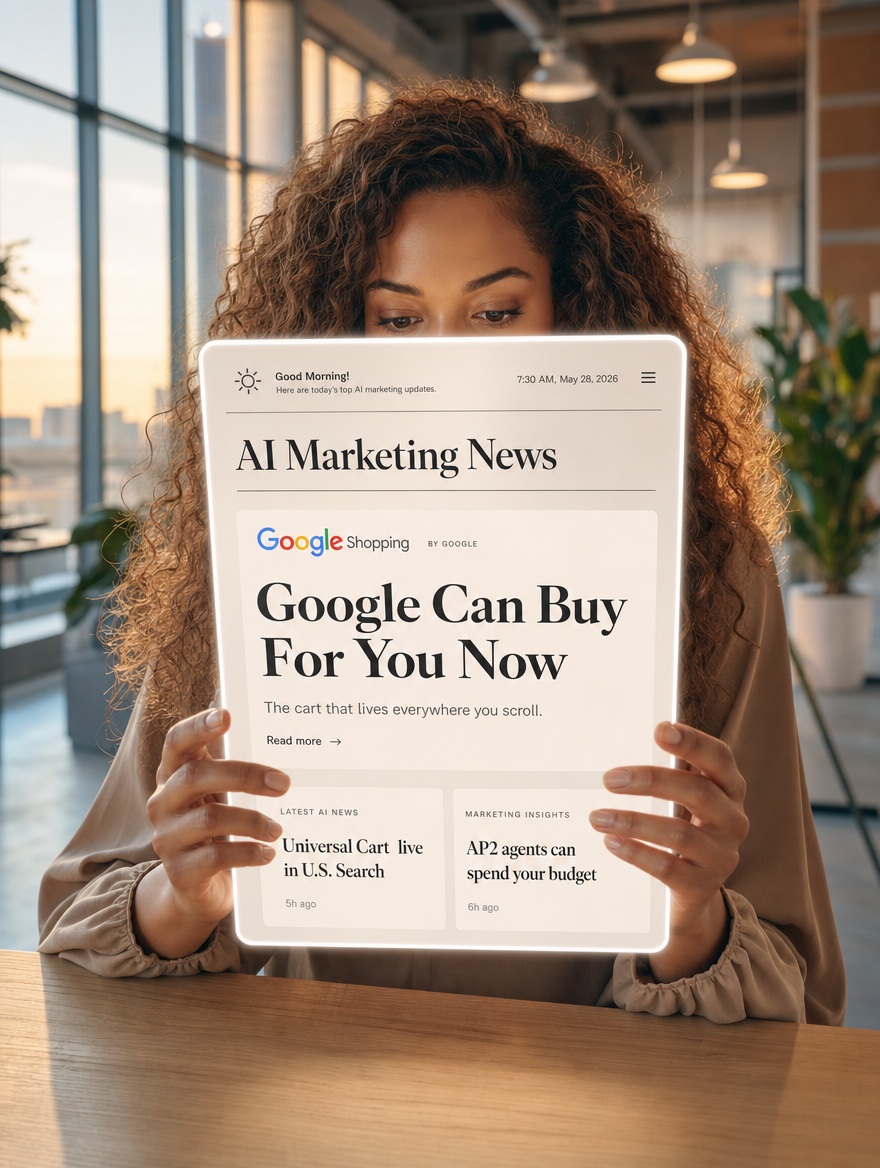
May 28, 2026 | 4 min read
Nine days ago, at Google I/O 2026, something quietly significant happened. Google did not just launch a new product feature. It announced a new layer of infrastructure that sits between your brand and your customer’s wallet.
They called it Universal Cart. But the more I looked at it, the more I realized the cart is almost the small part of the story.
The bigger shift is the Agent Payments Protocol (AP2). And if you are in e-commerce, retail, or performance marketing, this one deserves your full attention before Q4 planning begins.
What Actually Happened
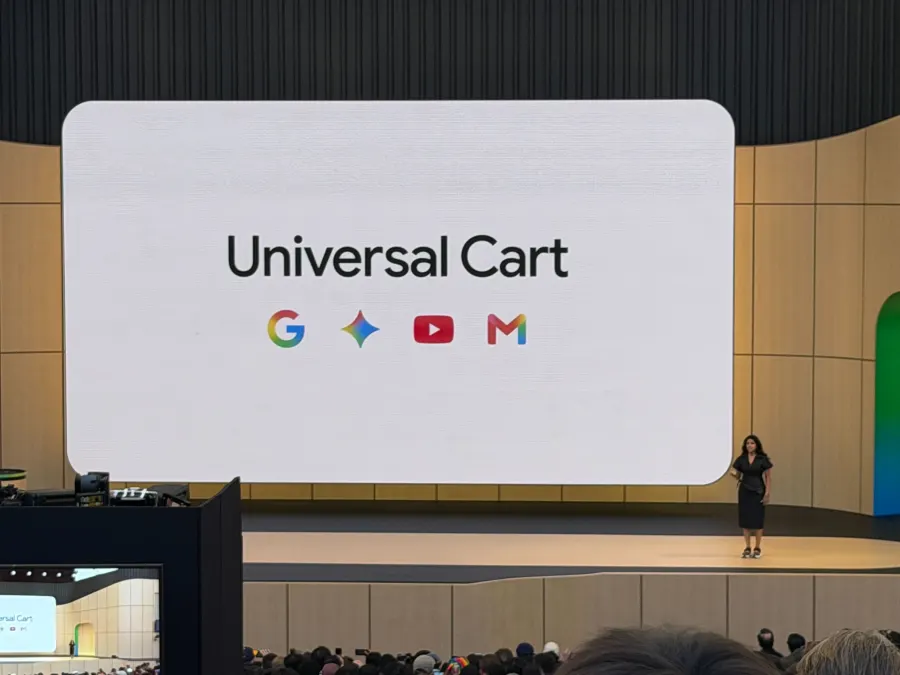
On May 19, 2026, Google introduced Universal Cart, a single intelligent shopping hub that lives across Search, Gemini, YouTube, and Gmail simultaneously.
Users can add products to their cart while browsing Search results, chatting with Gemini, watching a YouTube review, or reading a Gmail confirmation. The cart travels with them.
Once items are added, Gemini runs in the background doing work your product team currently cannot: tracking price drops, surfacing price history insights, flagging product incompatibilities, and identifying card perks and loyalty savings automatically.
“Universal Cart is an intelligent shopping cart and your new hub for shopping on Google. It works across merchants and across services.”, Vidhya Srinivasan, VP/GM Ads and Commerce, Google
The checkout experience is built on Google’s Universal Commerce Protocol (UCP), an open standard that major retailers have been signing onto since January. At launch, checkout is live with Nike, Sephora, Target, Ulta Beauty, Walmart, Wayfair, and Shopify merchants including Fenty and Steve Madden.
Then there is AP2. Google’s Agent Payments Protocol lets users set conditions, specific brands, products, and a spending cap, and authorize an AI agent to complete the purchase automatically when those conditions are met. The transaction creates a tamper-proof digital receipt linking the buyer, the merchant, and the payment processor.
Google has 60 billion product listings in its Shopping Graph. Over a billion shopping sessions happen on Google every single day. AP2 is coming to Google products in the coming months, starting with Gemini Spark.
Why This Hits Different for Marketers
Let me be direct about what this means for anyone running an e-commerce or retail brand.
Until now, the shopping funnel looked like this: you paid to put your product in front of a shopper at the awareness or discovery stage, and then you prayed they visited your site and converted. Your website was the destination. Your checkout flow was your final chance to close.
That model is being restructured.
With Universal Cart and AP2, the bottom of the funnel is moving inside Google. The cart is Google. The checkout is Google. The agent making the purchase is operating inside Google’s ecosystem, not yours.
This is not hypothetical. Nike, Walmart, and Target are already live. The infrastructure is already operational. The consumer behavior shift will follow quickly, because the experience is genuinely better for the shopper.
For brands that are not yet UCP-compatible, this creates a real visibility gap. When an AI agent shops on behalf of a customer and your brand is not in the Universal Commerce Protocol ecosystem, you do not appear as an option. The agent does not visit your site. It simply works with what is available inside the system.
This is similar to what happened with Google’s Shopping tab in 2012. Brands that were not properly listed in the Shopping Graph lost organic product visibility almost overnight. The same pressure is building here, but the stakes are higher because the agent is not just finding your product. It is completing the purchase.
What to Do This Week
Here are three concrete moves worth making right now.
First, audit your Google Merchant Center setup immediately. Universal Cart and UCP-powered checkout rely on clean, accurate product data in the Shopping Graph. If your feed has errors, outdated pricing, or missing attributes, you will not surface cleanly in the cart’s AI reasoning. This is not a “nice to fix later” issue. It is a pre-condition for being visible in agentic commerce.
Second, get on the waitlist for UCP merchant integration if your volume justifies it. Google’s checkout experience is expanding to Canada, Australia, and the UK in the coming months. The brands already live at launch have a head start on review data, purchase velocity signals, and checkout conversion data that will train Google’s recommendation systems. Early adopters will compound that advantage.
Third, rethink how you are measuring influence. If an agent completes a purchase autonomously on a user’s behalf, the attribution path looks very different from a standard click-to-conversion journey. Talk to your analytics team now about how you will track and credit conversions that originate from Gemini or Search AI Mode surfaces. Your existing last-click models will not capture this cleanly.
The brands that get ahead of this are the ones that treat agentic commerce as infrastructure work, not a campaign. This is plumbing, not paint.
Google has been laying this foundation for over a year. Universal Cart is not a surprise announcement. It is the moment the infrastructure goes live for consumers. The question is whether your brand is plumbed into it.
What is your team’s current status with Google Merchant Center and UCP? I am curious how many marketers are actually tracking this shift at the operational level.
Found this useful? Drop a comment below, I read every one.
I built a free tool that audits your website in 60 seconds. You get a score, an AI voice summary, and a step-by-step PDF. → edwinrogers.com/audit
Follow for daily AI marketing breakdowns, every morning → @edwinrogerscom